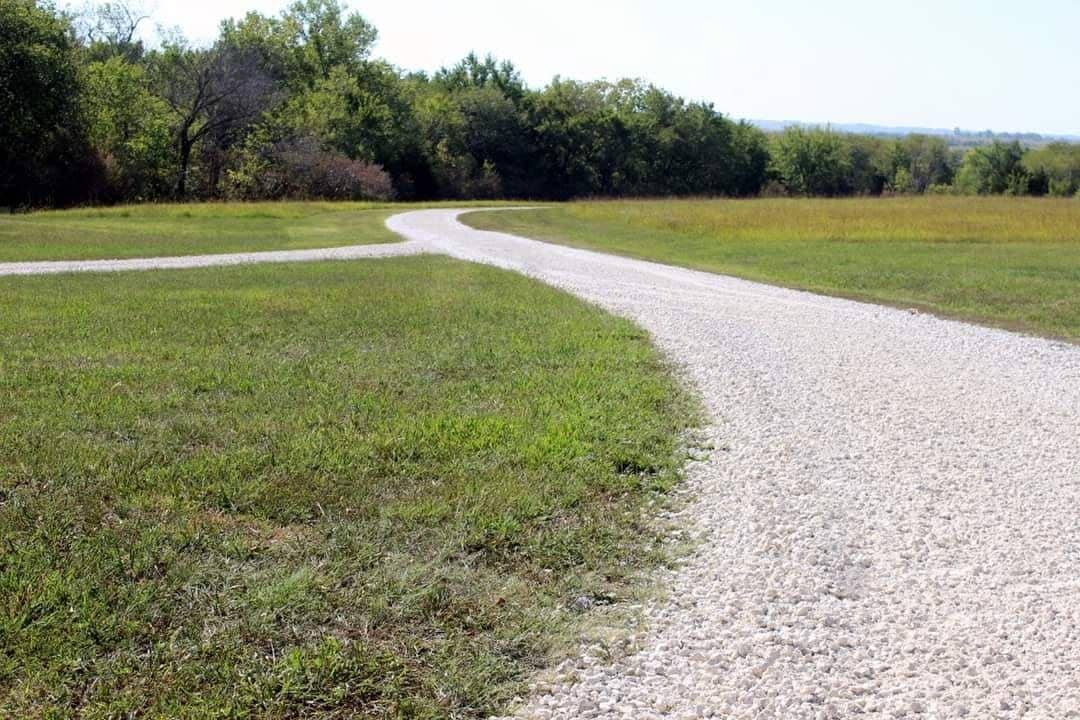
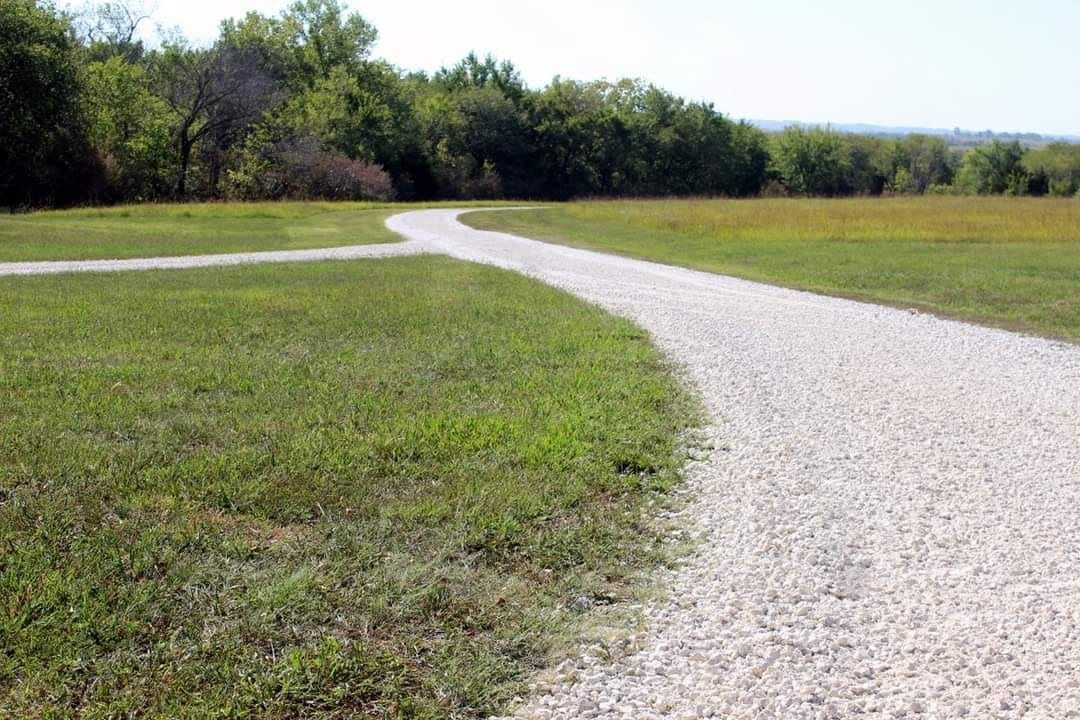
A gravel driveway has no guaranteed lifespan. Drainage, the ground under the gravel, traffic, material selection, and upkeep decide how long it stays usable before major work is needed. A well-shaped drive may need periodic grading and fresh surface material; a drive that holds water can fail much sooner. Judge its condition, not a promise of years.
A Kansas driveway can look fine in dry weather and soften when rain finds a low spot. The useful question is not “How long does gravel last?” but “What will keep this route draining and carrying the vehicles that use it?” Here is a way to inspect the weak points and ask a contractor for a plan.
Water is often the first thing to inspect
Watch where runoff enters and leaves
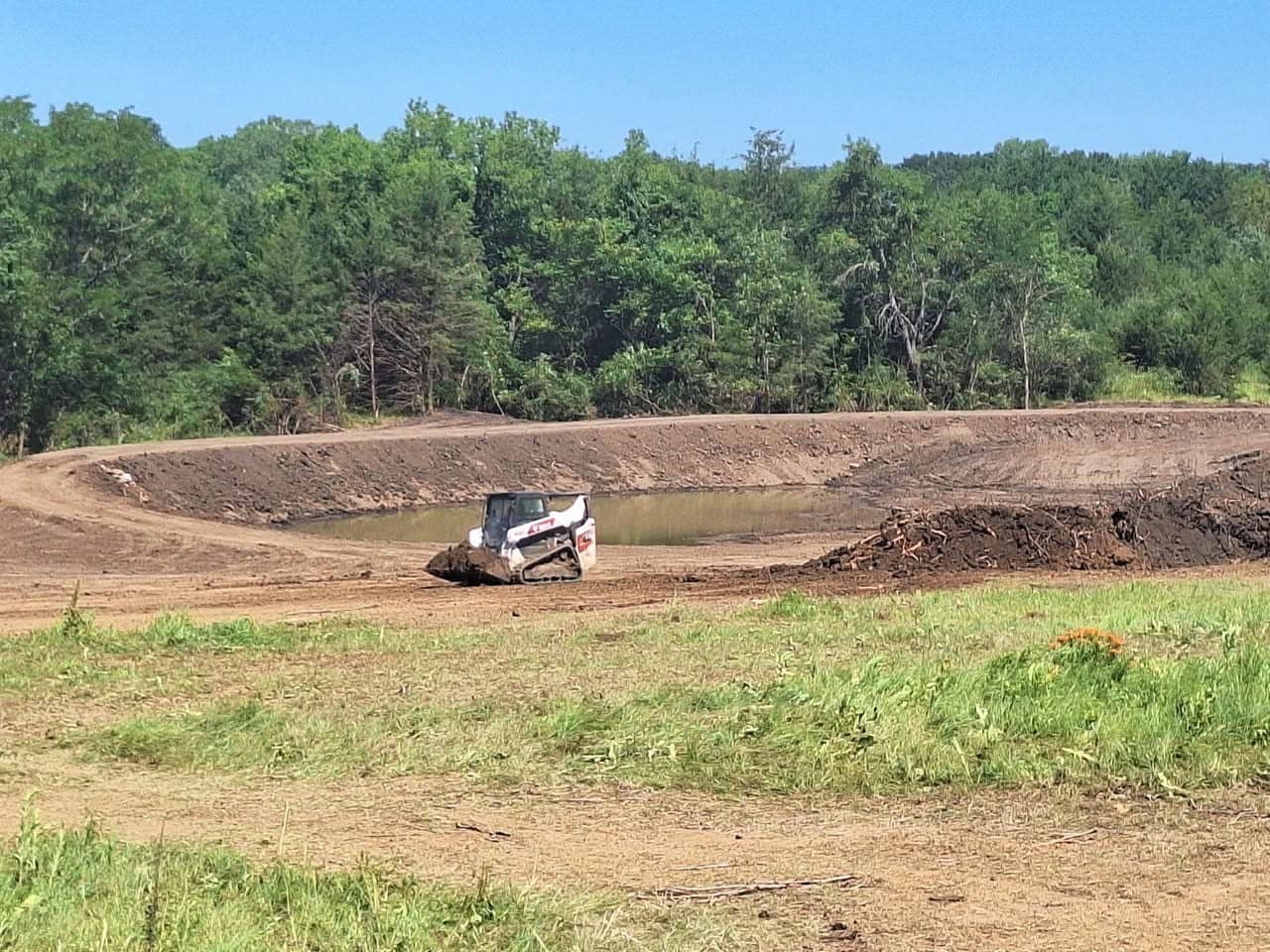
After rain, see whether water crosses the drive, follows tire tracks, or pools at a gate. Water can weaken support under traffic. A fix may mean reshaping the surface, correcting an outlet, or treating the ground below. More gravel alone may hide the problem.
The FHWA Gravel Roads Construction and Maintenance Guide explains how crown, shoulders, and drainage work together. Its public-road examples are not a private-driveway warranty or a fixed design.
Check crown, edges, and outlets together
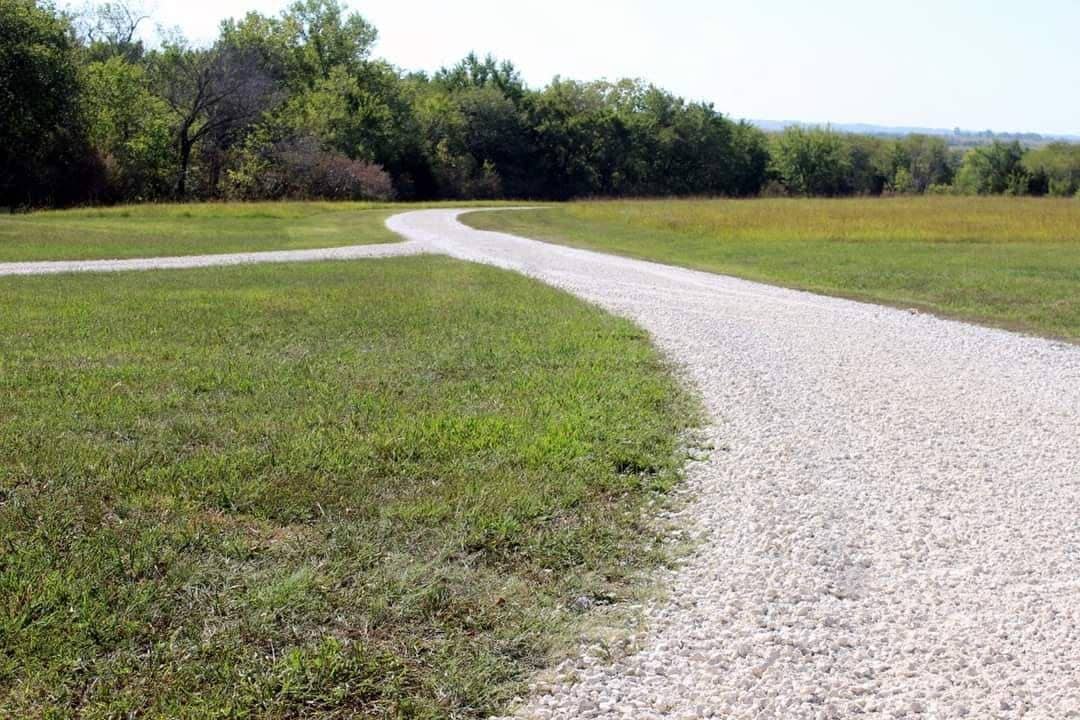
A gently shaped surface can guide water toward a safe edge. If the shoulder becomes a raised berm, water may stay on the driving surface despite a crown. If a ditch has no outlet, runoff may return farther down the lane. The best cross-section depends on slope, property boundaries, and the route’s use, not a single rule copied from a road manual.
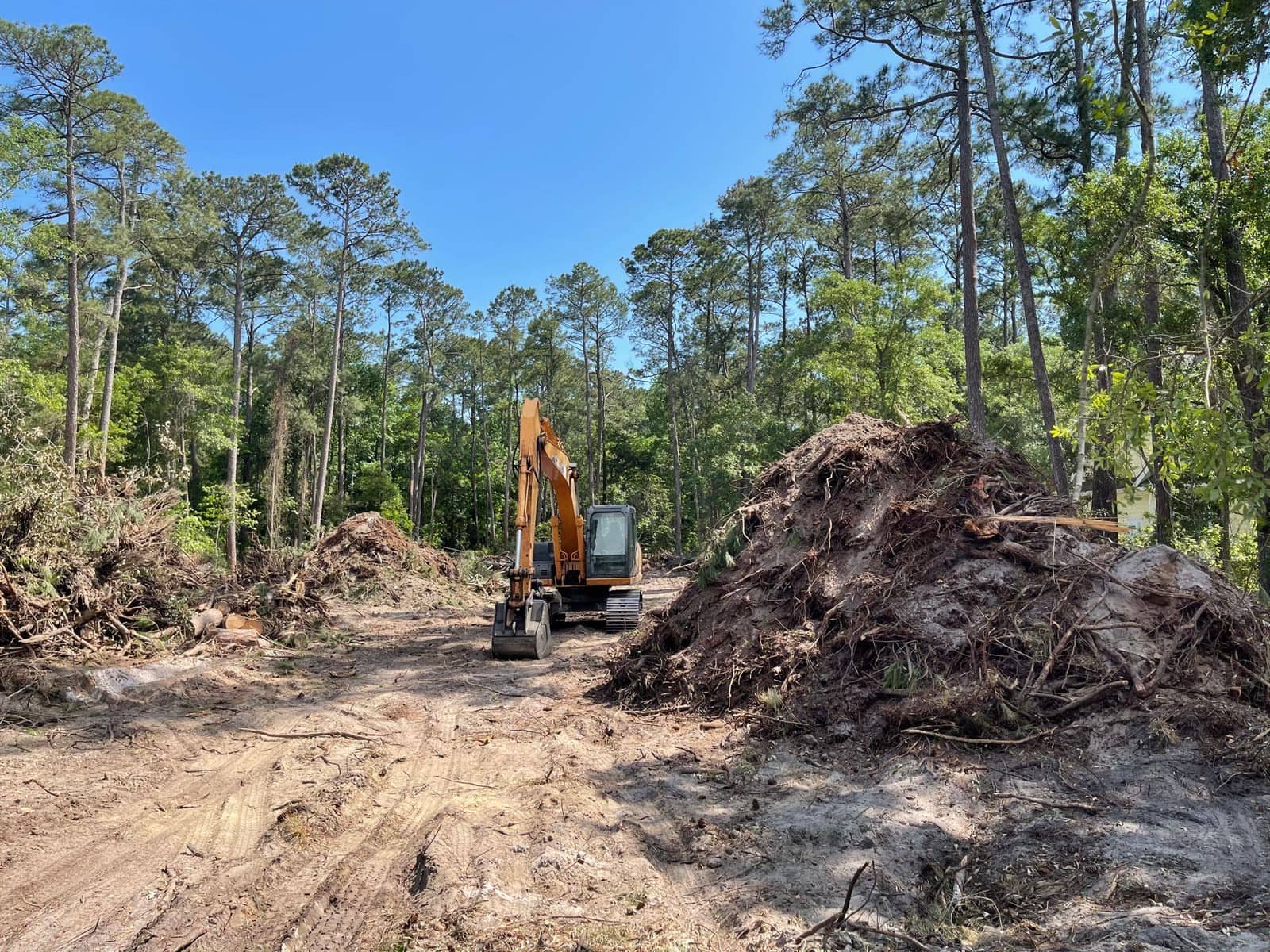
All Seasons’ trail and driveway service page lists subgrade preparation, grading, aggregate, drainage, and compaction as parts of its service. Ask how those steps apply to your route. A service list does not promise that every driveway needs or receives the same design.
The ground below determines what the surface can carry
Soft subgrade can keep swallowing gravel
Subgrade is the soil beneath the built layers. When it stays soft or wet, traffic can push gravel into it, leaving ruts and a thin surface. More stone alone may not solve a weak underlying area. A contractor may need to look at drainage and the base before deciding what material belongs there.
This is why two driveways with the same surface gravel can age differently. One sits on firm, shaped ground. The other crosses a wet low point. Ask what was done under the visible layer and whether the soft area is local or runs the full length. Do not assume a fabric, base depth, or material mix without a site assessment.
Base and surface serve different jobs
A base supports vehicles; the surface is a wearing layer. Gradation, depth, compaction, and underlying soil affect performance. Tell the contractor what vehicles use the drive, including deliveries, before discussing repair.
How a driveway was built helps explain its condition. If the ground stays wet or the surface does not shed water, adding stone may not fix repeat damage. A repair plan starts with a site assessment, not an assumed base depth.
Traffic and shape change the wear pattern
Turns, braking, and heavy loads concentrate damage
A straight stretch used by light vehicles may wear differently from a sharp turn where tires push loose stone outward. Trucks may rut a soft entrance, especially after rain. Note where vehicles stop, turn, or climb a slope. If the same section needs fresh gravel again and again, ask whether traffic, drainage, or base support is the main cause.
All Seasons’ live gravel driveway ideas article is about route layout and edging. This article asks how the built route holds up over time. A good-looking border cannot make a soft turn carry repeated heavy traffic on its own.
Narrow edges can make routine repair harder
Gravel migrates at turns and along shoulders. If the route has no usable edge, regrading can push material into a ditch or landscape bed. A narrow driveway may also force every vehicle into the same ruts. Ask whether the current width and turn space match the vehicles using it, and whether future surface maintenance can be done without damaging adjacent ground.
A low area near a gate may be a drainage issue rather than a request for decorative edging. The right repair may begin outside the damaged patch. Separate the appearance goal from the functional need so a quote does not replace a drainage fix with a cosmetic top layer.
Maintenance keeps a drive useful, but has limits
Look for patterns, not a date on the calendar
Inspect after a heavy rain and during regular use. Watch for standing water, recurring potholes, loose washboard ridges, gravel loss at turns, and ruts that deepen. A little surface movement may call for shaping; repeated deep failure may point to the base or water. Not every defect means the whole driveway needs rebuilding.
The FHWA guide discusses periodic shaping and recovering loose material on gravel roads. A private owner can use those ideas as questions for a contractor, not as a schedule that fits every lane. Ask what routine care is realistic and what signs should trigger a deeper inspection. A “lasts X years” claim cannot replace that judgment.
Know when topping up is the wrong fix
If a pothole comes back in the same place, a tire track stays wet, or a section settles after every repair, ask for a site review. The crew may need to identify where water moves, whether the base still supports traffic, and what condition the subgrade is in. Do not approve a full rebuild or a simple top-up solely from an online lifespan average.
If repair includes excavation, coordinate utility marking before digging. Kansas 811’s homeowner guidance describes the locate process and notes that privately owned lines may not be marked by public utilities. Point out known private utilities, drains, and septic features to the contractor as well.
Gravel driveway lifespan questions
How many years does a gravel driveway last?
Does adding gravel extend its life?
How often should a gravel driveway be regraded?
Can water damage a gravel driveway in winter?
Plan for performance, not a promised year count
A gravel driveway lasts as long as its shape, base, and upkeep support the traffic it receives. Follow water after rain, note repeat damage, and tell a contractor how the route is used. A site-based plan can separate small maintenance from a deeper repair without inventing a guaranteed lifespan.
For a driveway or access trail near Auburn, Kansas, ask All Seasons Excavating & Landscape for a site review. Describe the wet spots, vehicles, and repair history, then request a written scope for the parts of the drive that actually need work.